I turn ideas into systems that ship.
Product thinking and full-stack engineering, with security designed in.
A
|
AI-native product building
Agents and retrieval designed into the product from the start. I build MCP servers and graph APIs, and pipelines that abstain when they aren't sure.
Product context, research and ideation
Market research, pitch decks, system architecture, and deciding what's worth building before anyone writes a line of it. Two of the products I researched went on to raise money.
Shipping, deployment and pipelining
AWS, CI, containers and migrations. Then the unglamorous part, keeping it alive after launch: dependency sweeps, moving between providers, and knowing what's safe to delete.
Three different skills, and I bring them all.
Experience so far.
Fiserv
Cybersecurity analyst, IAM
2026 to now, Chennai
I work in the IAM solutions domain and build AI systems for the security wing, so the product half of me and the security half finally do the same job.

Unified Product Graph
Open source contributor
2026 to now, Remote
I help build the Model Context Protocol server that lets AI agents read and write product knowledge as a typed graph. I've also worked on the local command line and parts of the spec, and the project has eight packages on npm.
Venture Cube
Founding engineer
2024 to 2026, Dubai, remote
I worked across four ventures. I built Adloom.ai and every dashboard behind Deals24.ai, and ran the research and the decks for Sanady.ai, all against real deadlines with real money watching.
My playbook for building a good system.
Most of the value is decided in the first three, before anyone writes code. That’s the part I want to be in the room for.
How I think about products.
I spent a year as a founding engineer at a venture studio in Dubai, where I worked on products from the first conversation about them. I built Adloom.ai's platform and every dashboard behind Deals24.ai, and ran the research and the product process for Sanady.ai. Two of those ventures raised money. One of them didn't survive anyway, and that taught me more than the raise did.
Now I work in IAM at Fiserv and build AI systems for the security team. I care about systems that stay correct under load at three in the morning, when nobody is watching. Product work and security work both come down to that.
What my tech stack is.
These are the tools I’ve worked with, in no particular order. The harder skill is knowing which one a problem needs, and how much of it.
Two of us could build what used to take ten.
AI made it easier to produce things, but no easier to keep them all in your head. One person now ships in a week what used to take a team a quarter, and almost none of it is connected by design, so the documents pile up and the context doesn't.
Read moreRead less
So I stopped handing agents documents and started handing them a graph. Product knowledge goes into UPG as typed entities with explicit relationships: a persona connects to a need, a need to an opportunity, an opportunity to the solution and the experiment that tested it. The standard has 324 entity types across 37 domains, joined by six kinds of edge.
Then I build the harness on top of it. Agents read the graph through a Model Context Protocol server instead of guessing from prose, so they start out knowing what the product is and what was decided about it last week. The same graph renders as an opportunity solution tree, a business model canvas or a roadmap, so nobody has to rebuild the context to answer a different question.
This is what makes a small team fast: planning stops being a meeting where everyone reloads the same background, because the graph keeps everyone on the same page. With that in place, two people and an idea make a real team.
Unified Product Graph solves this, and it is open source: unifiedproductgraph.org
Things I have built.
You made it this far. Come see what I've built.- Adloom.ai2025An AI-driven billboard advertising platform, taken from nothing to real campaigns.
- LedgerLine2026Upload a bank statement and it becomes a budget you physically cannot overspend.
- Deals24.ai2025A platform for distressed real estate, serving three kinds of user.
- Sanady.ai2025Small loans for expatriates, designed from the first conversation about it.
- Unified Product Graph2026 to nowAn open standard for product knowledge, and the tooling that makes it usable.
- Research orchestration2025Long-running agent research that survives a crash.
- ADCEA2025Hand it a raw dataset, get back a trained baseline.
- ArtiShine2025Artisans photograph their work and get a story and a social post back.
- Agentic fuzzy control2026A fast control loop, with a slower reasoning loop deciding its rules.
- Remedify2025A health assistant you talk to, running a local model.
Education.
B.Tech, Computer Science and Engineering (IoT)
Shiv Nadar University Chennai
2022 to 2026, CGPA 8.75
Also, in progress
BS in Data Science
IIT Madras
2023 to 2027
I’m proud of these.
IEEE, 2026
Agentic fuzzy control: a dual-loop framework for self-adaptive IoT systems
About 78% lower energy and 8% lower overshoot against static and fuzzy-only baselines.
Seed funded at university
Won INR 10,000 and approval for an IoT build under the STIRS programme, on my own research and pitch
Motto
“Do not go gentle into that good night. Rage, rage against the dying of the light.”
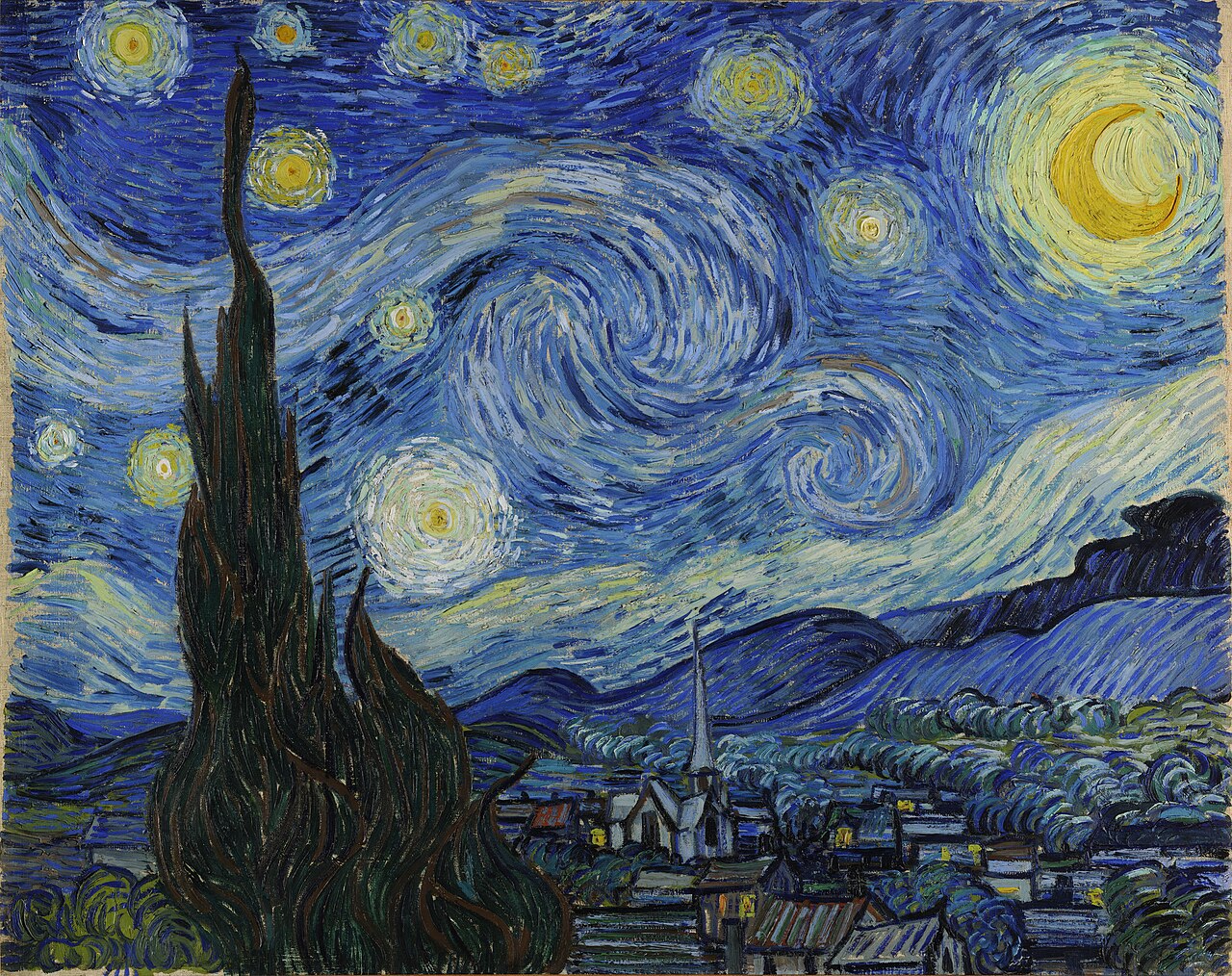
Most products don't die loudly. They fade, and the first thing to go is the reason anyone started. Product thinking is how I keep that reason in view, and building is what makes it stick. Thomas wrote the line as a plea from one person to another, and that's the part I keep: the refusal works better with someone beside you.
Bring me something challenging, and let’s build it together.
I'm looking for people with something worth building. If it's still an idea, show me early. If it's already built and needs to hold up better than it does, that's the same conversation. Bring it on!